HIPAA & Compliance
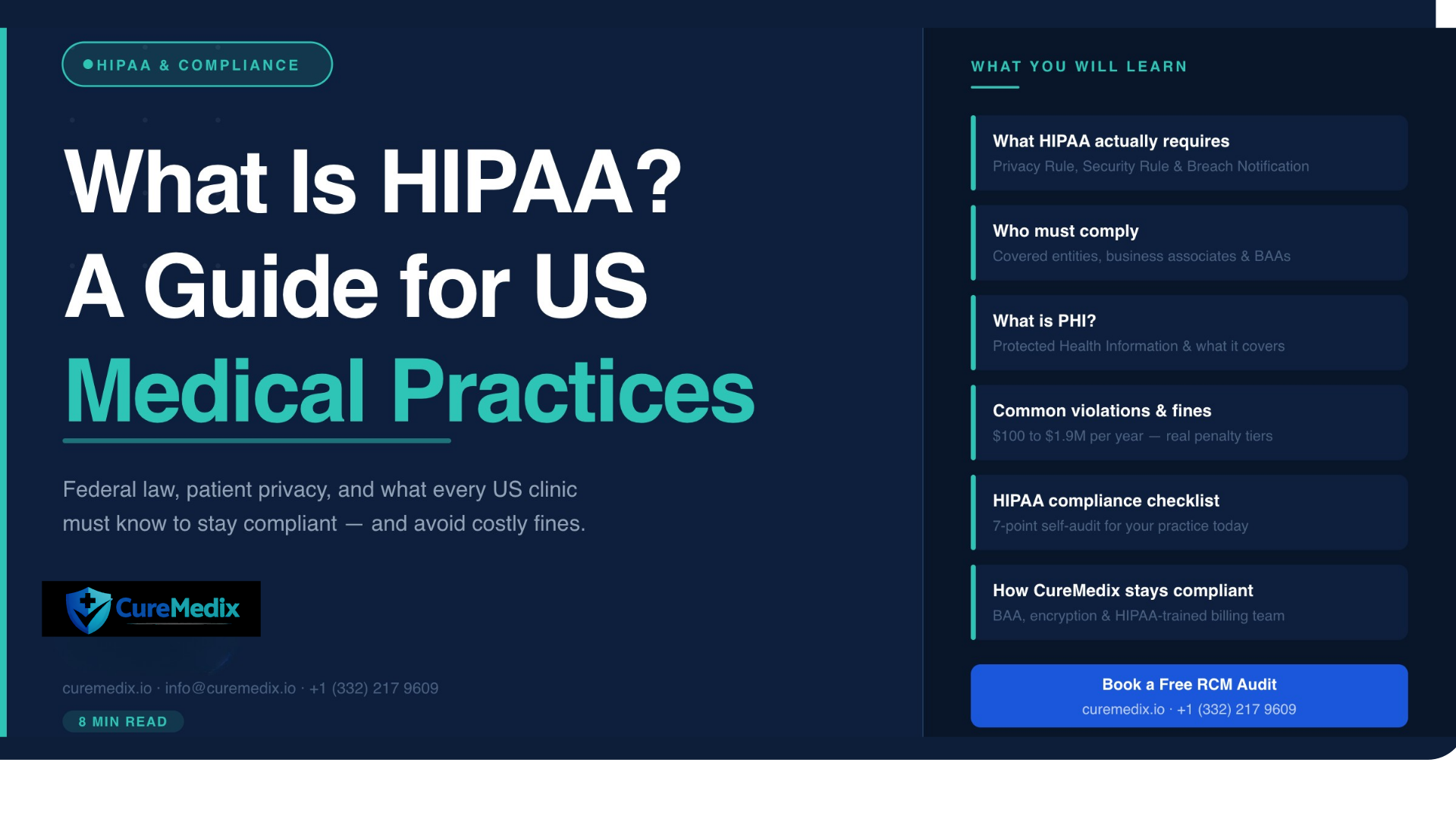
What Is HIPAA? A Complete Guide for US Medical Practices
If you run a medical or dental practice in the United States, what is HIPAA for medical practices is one of the most important questions you must answer — because HIPAA is not optional. It is federal law. In fact, thousands of independent clinics across California, Texas, Florida, New York, and Illinois unknowingly violate HIPAA every year, facing fines ranging from $100 to $50,000 per violation.
As a result, this guide explains exactly what HIPAA is, what it requires from your practice, and the practical steps you can take today to stay compliant and protect your patients.
What Does HIPAA Stand For?
HIPAA stands for the Health Insurance Portability and Accountability Act. Specifically, President Bill Clinton signed it into law in 1996 to accomplish two things:
However, for most medical practices today, HIPAA is primarily known for its Privacy Rule and Security Rule — both of which govern how your practice handles, stores, and shares patient information.
Who Must Comply With HIPAA?
First and foremost, HIPAA compliance for medical practices applies to two categories of organizations:
Covered Entities
Generally speaking, these are organizations that directly handle patient health information:
- Medical doctors, specialists, and physicians
- Dental practices and orthodontists
- Hospitals and urgent care centers
- Health insurance companies and payers
- Pharmacies and labs
Business Associates
Similarly, any vendor or third-party service that handles patient data on behalf of a covered entity is also subject to HIPAA. This includes:
- Medical billing companies (like CureMedix)
- EHR (Electronic Health Record) software providers
- Cloud storage services used for patient data
- Practice management consultants
Therefore, if you outsource your billing or use any third-party software that touches patient data, you must sign a Business Associate Agreement (BAA) with that vendor. Without a BAA, your practice already violates HIPAA — even unintentionally.
The 3 Core HIPAA Rules Every US Practice Must Know
The HIPAA Privacy Rule
The Privacy Rule sets national standards that protect individuals’ medical records and personal health information (PHI). Specifically, this rule requires that:
- Patients have the right to access their own health records.
- You cannot share PHI without patient authorization except in specific circumstances (treatment, payment, healthcare operations).
- You must provide patients with a Notice of Privacy Practices.
- You must limit PHI disclosures to the minimum necessary.
The HIPAA Security Rule
In addition to the Privacy Rule, the Security Rule specifically covers electronic Protected Health Information (ePHI). It requires every practice to implement:
- Administrative safeguards — staff training, access controls, written policies
- Physical safeguards — locked offices, screen locks, secure workstations
- Technical safeguards — encryption, firewalls, audit logs, secure email
The HIPAA Breach Notification Rule
Finally, and equally important,, if a data breach occurs — even an accidental one — the law requires you to:
- Notify affected patients within 60 days of discovering the breach.
- Notify the Department of Health and Human Services (HHS).
- If over 500 patients are affected in one state, notify prominent local media.
What Is PHI (Protected Health Information)?
PHI is any information that identifies a patient and relates to their health, treatment, or payment. To clarify, understanding PHI forms the foundation of HIPAA compliance for small medical practices. PHI includes:
- Names, addresses, phone numbers, email addresses
- Social Security numbers and dates of birth
- Medical record numbers and account numbers
- Diagnosis codes, treatment notes, lab results
- Photos and IP addresses linked to health records
For example, even a conversation between two staff members about a patient in a public waiting room can constitute a HIPAA violation.
Common HIPAA Violations in Small Practices
According to HHS enforcement data, the most common HIPAA violations in independent medical and dental practices across the US include:
- Sending patient information over unencrypted email
- Leaving patient records visible on computer screens
- Discussing patient cases in public areas
- Using personal devices without HIPAA-compliant software
- Not having signed BAAs with billing vendors and software providers
- Failing to conduct annual HIPAA risk assessments
- Not providing staff with HIPAA training
HIPAA Fines: How Much Can Your Practice Be Penalized?
As a consequence, the Office for Civil Rights (OCR) at HHS enforces HIPAA. Importantly, penalties increase based on the level of negligence:
| Violation Category | Min Penalty | Max Penalty |
|---|---|---|
| Did not know | $100 | $50,000 |
| Reasonable cause | $1,000 | $50,000 |
| Willful neglect (corrected) | $10,000 | $50,000 |
| Willful neglect (not corrected) | $50,000 | $1.9 million/year |
In fact, in 2023 alone, HHS collected over $4.1 million in HIPAA penalties from healthcare providers across the United States. For the full official HIPAA regulations and enforcement details, visit the official HHS HIPAA resource page.
How CureMedix Helps Your Practice Stay HIPAA Compliant
At CureMedix, HIPAA compliance for medical practices is built into everything we do. As a result, as a Business Associate for 12+ medical and dental clinics across the US, we:
- Sign a comprehensive BAA with every client before we begin work.
- Handle all billing communications through HIPAA-compliant, encrypted channels.
- Train our entire team on HIPAA privacy and security requirements.
- Conduct regular internal audits to ensure continued compliance.
- Never store, share, or access patient data beyond what is required for billing operations.
In short, when you outsource your revenue cycle management to CureMedix, our team handles your patients’ data with the same legal rigor you apply in your own practice.
HIPAA Compliance Checklist: Start Here Today
To summarize everything above, use this quick checklist to assess where your practice stands today:
- Do you have a signed BAA with every vendor that touches patient data?
- Do you conduct annual HIPAA risk assessments?
- Have all staff completed HIPAA training in the last 12 months?
- Is all patient data stored in encrypted, password-protected systems?
- Do you have a documented breach notification procedure?
- Are workstations locked when unattended?
- Is patient communication sent through HIPAA-compliant platforms?
Therefore, if you answered “no” to any of the above, your practice may already be at risk of a costly HIPAA violation.
Frequently Asked Questions About HIPAA
Below, we answer the most common questions US practices ask about HIPAA compliance.
Is HIPAA only for hospitals, or does it apply to small clinics too?
HIPAA applies to any healthcare provider that transmits health information electronically — including small independent medical and dental practices, regardless of size or location.
What happens if a staff member accidentally shares patient information?
Accidental disclosures can still constitute a HIPAA breach. As a result, the practice must assess the risk, document the incident, and determine whether patient notification is required within 60 days.
Do I need a BAA with my billing company?
Yes. Any billing company that handles your patient data is a Business Associate under HIPAA law. A signed BAA is legally required before sharing any PHI with a vendor.
How often should we conduct HIPAA training for staff?
HHS recommends annual HIPAA training for all staff. Furthermore, new employees should complete training before they have any access to patient information.
Can patients request their own medical records under HIPAA?
Yes. Under the HIPAA Privacy Rule, patients have the right to access and obtain copies of their own health records. Therefore, you must fulfill such requests within 30 days.
Does HIPAA apply to mental health records?
Yes. Mental health records are protected health information under HIPAA. In addition, in many states they receive even stronger legal protections than general medical records.
What is the difference between HIPAA Privacy Rule and Security Rule?
The Privacy Rule covers all forms of PHI including paper, verbal, and electronic. In contrast, the Security Rule specifically applies to electronic PHI (ePHI) and sets technical, administrative, and physical safeguard requirements.
Ready to Simplify HIPAA Compliance and Boost Revenue?
CureMedix handles HIPAA-compliant medical billing for clinics across the US. In other words, we take compliance off your plate so you can focus on patient care. Book a free consultation to see how we can help your practice stay compliant and maximize collections.